
Reconstruct Telfair County Former Owners Transfer by Transfer
A backward deed table keeps names and tracts from drifting apart. Begin with the newest deed verified against the parcel. Then add one row each time a former grantee reappears as a grantor, so every prior owner of record stays tied to the same land.
| Transfer date | Grantor to grantee | Deed type | Book/page |
|---|---|---|---|
| Newest verified recording | Prior holder to current grantee | Read the caption | Save exact reference |
| Next older recording | Earlier holder to that prior grantee | Warranty, quitclaim, estate, or other | Match description |
| Earlier book entry | Repeat the role reversal | Include corrections and court-driven deeds | Carry reference forward |
Treat the table as a worksheet, not proof that every transfer was a sale. Gifts, estate deeds, sheriff's deeds, and corrections can each change or clarify an interest in the property records.
Go Back Through the Telfair County Grantor-Grantee Chain
Run the GSCCCA name index in reverse. The newest grantee tells you which grantor to search next, though each candidate must match the tract before you step further back through the deed records.
- Find the present holder's acquiring deed with that party as grantee.
- Read its grantor and full legal description.
- Search that grantor as an earlier grantee with name variants and dates.
- Repeat until the web layer ends, then continue in the index books.
- Grantor
- The party conveying an interest.
- Grantee
- The party receiving it.
- Chain of title
- The ordered instruments affecting a tract.
- Reverse index
- An index organized by grantee.
- Legal description
- The land description that outlasts many street labels.
Bridge Telfair County's Three Deed-Record Eras
FamilySearch catalogs Telfair deeds and mortgages from 1808 through 1904 on 16 reels. The reels include direct and reverse indexes. Kofile divides historic books into 1955-1975 and 1975-1995 bands. GSCCCA notices point to central-index coverage from 1990 or 1999 depending on context. These are access layers only. They never prove that older deed records vanished. The 1905-1954 bridge remains an unresolved access question for the Clerk.
Note: Ask which deed books or microfilm cover 1905-1954 rather than describing that span as a loss.
Search the Telfair County Historic Kofile Bands
The Telfair Kofile QuickLink is the documented mid-century index route.
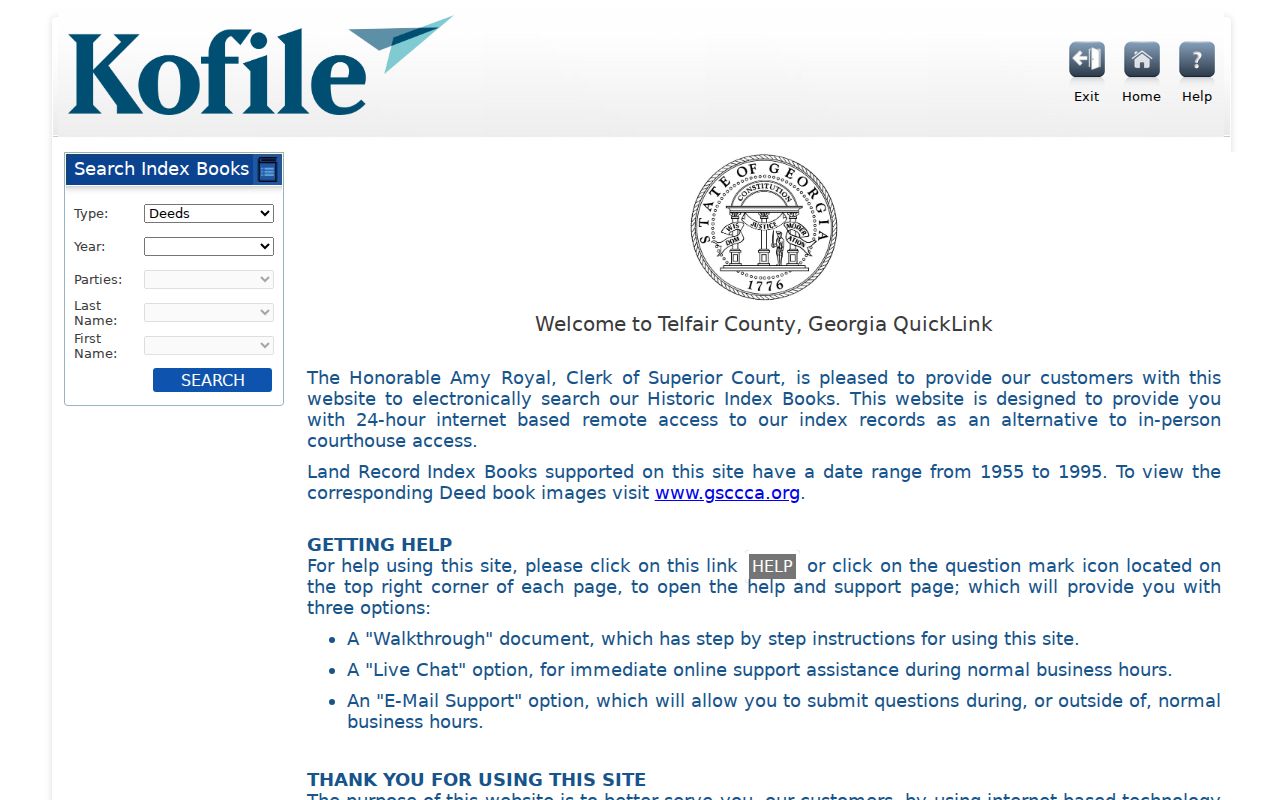
Year bands only pick a source. The book page and legal description decide whether a named former owner truly belongs in the chain of title.
Extend Telfair County Previous Owners Through Microfilm
The FamilySearch direct index begins in 1809. Its reverse index opens in 1888. Search surnames, initials, married names, entity suffixes, and estate forms in both directions, since access can depend on catalog restrictions or a FamilySearch center. The Telfair Public Library genealogy department and archival resources can add historic context to the chain. Newspapers may explain an old mill or railroad name. Only a recorded instrument, though, establishes its link to the tract.
Anchor Telfair County Prior Owners to the Land
Match the land lot and district first. Then compare acreage, lot and block, subdivision caption, roads, creeks, railroads, and adjoining calls before trusting any name in the deed records. Same-name hits without tract matches stay leads. McRae and Helena merged in 2015, so retain both historic labels while tracing prior owners. Milan straddles the Dodge-Telfair line. A chain may therefore cross county systems. Follow the description rather than assuming every Milan tract stayed in Telfair.
Note: The legal description is the strongest continuity test when parcel numbers or street names change.
Recover Telfair County Chain Breaks Beyond Warranty Deeds
Estate, foreclosure, tax-sale, sheriff, trustee, quitclaim, correction, release, and court instruments can explain a missing transfer. Search both party roles. Widen the filter if the expected acquisition never appears in an ordinary deed result. Milan sources document cotton gins, sawmills, and turpentine stills. Older instruments may mention timber rights, mill parcels, or railroad rights-of-way, but treat these as search clues rather than claims about a current parcel.
Maintain a Dated Telfair County Former-Owner Ledger
A dated ledger keeps the chain honest. Record grantor, grantee, instrument, execution and recording dates, book/page, description excerpt, source, and next query for each deed. Mark uncertain rows. That keeps similarly named families and adjacent tracts from blending. For a missing image, use the Clerk at 19 East Oak Street, Suite C, where GSCCCA reporting confirms free clerk-office terminals during business hours, and remember that an online image is not a certified copy or a title opinion.
Filter the Telfair County Deed Index Without Losing a Transfer
The GSCCCA real-estate name form offers party type, instrument type, county, neighboring-county, name, date, display, and table choices. Start with Telfair County and a tight date band. Search the predecessor as both grantor and grantee, because the two roles point in opposite directions through time. Widen the filter if the acquisition never appears. An estate deed, quitclaim, sheriff's deed, tax deed, trustee deed, correction, or court-linked instrument can carry a chain across an event that a warranty-only query misses. Save the recording date and book/page first. Then change filters knowing the search can be reproduced.
The separate GSCCCA book/page form helps when one deed cites an earlier recording. Follow the citation directly. Check its parties and description against your working ledger before trusting it. A cited book/page is a powerful clue. The referenced document, though, can be an easement, plat, security deed, or correction rather than the prior vesting deed.
Compare the Telfair County Statewide Index With the Local Books
The GSCCCA real-estate index guide covers the statewide county-index system.
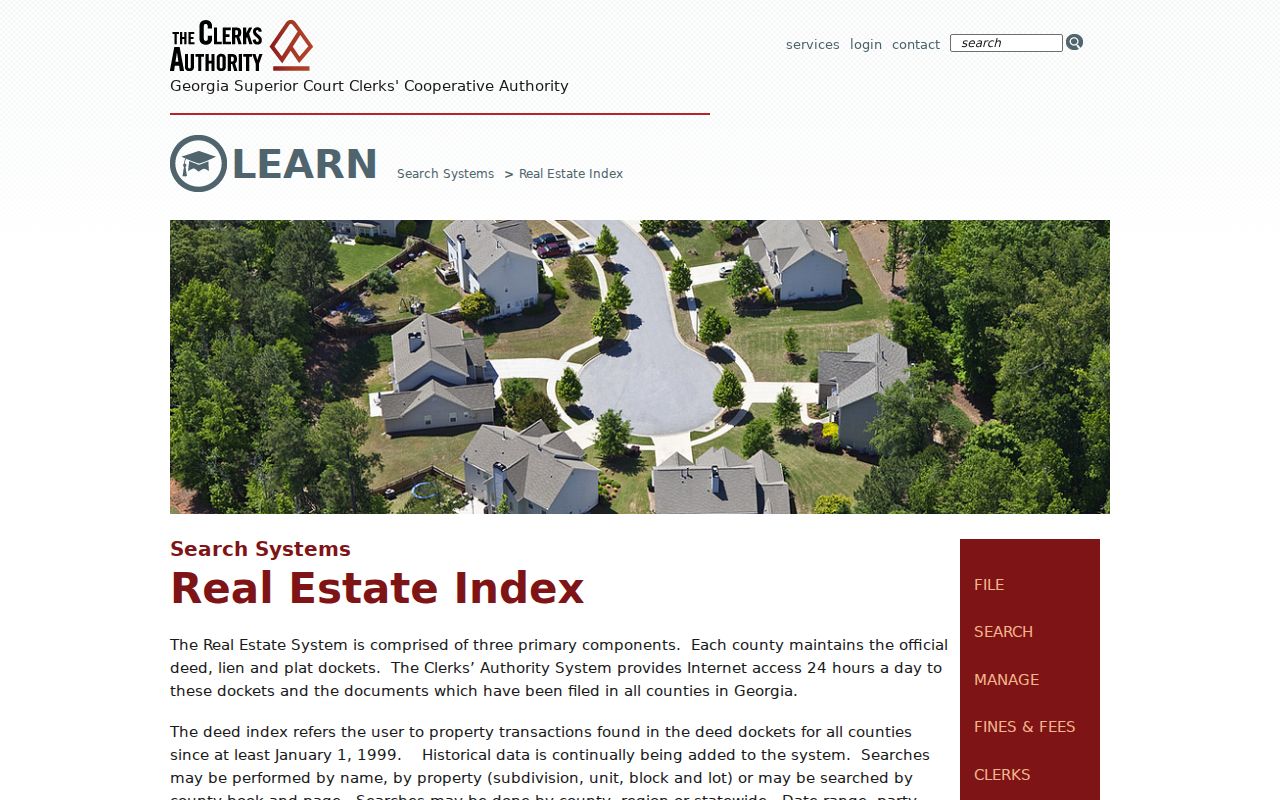
The statewide guide explains modern result fields. Kofile and FamilySearch add separate historic layers. Compare their coverage before assuming that a blank statewide result means no deed was recorded in Telfair County.
Use Telfair County Place History as an Index Clue
Telfair County was created in 1807. Jacksonville served as its first county seat. Those facts explain why early volumes and place references may look nothing like modern McRae-Helena addresses. Historic context narrows a search, but it cannot supply a former owner without a matched deed or other official land record.
Railroad-era growth can also shape descriptions. Milan grew around the railroad, and two official sources disagree on whether its depot dates to 1889 or 1899, so preserve both dates as unresolved context. Search the deed, plat, right-of-way record, and contemporary newspaper. Do not pick a date the primary property record has not settled.
Recognize Where Telfair County Former-Owner Coverage Stops Online
No single portal covers every era of Telfair County property records. A complete former-owner search means moving among GSCCCA, Kofile, FamilySearch microfilm, and the deed books held by the Clerk. Those layers sometimes leave a gap. Treat it as a gap. Do not guess at a transfer the deed records never show.
Note: A former-owner list is research help, not a title opinion. Certification, liens, and disputed rights still need a fuller review.
Coverage limit. Use deed books or microfilm for older former owners, and use this history only for lawful property research, never harassment.